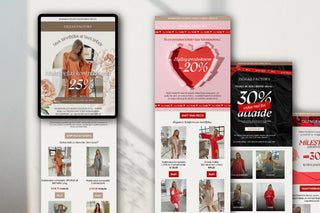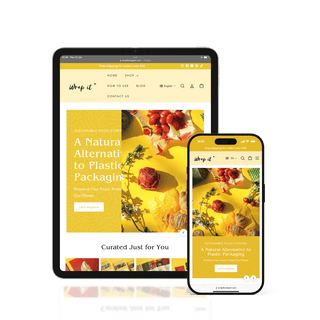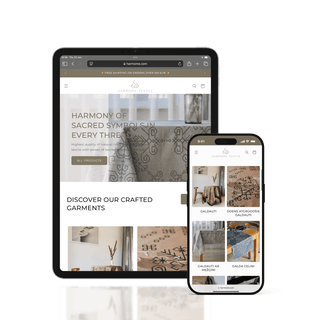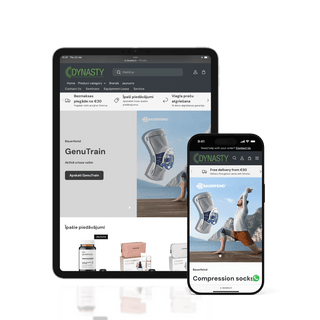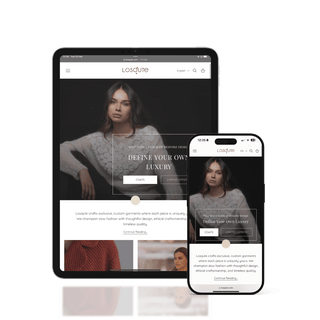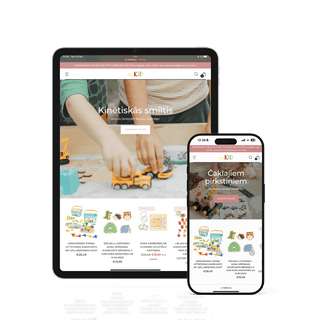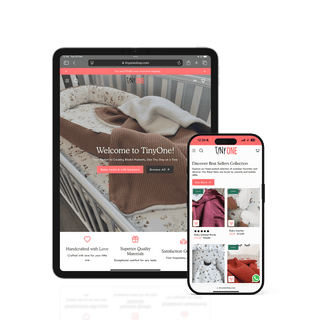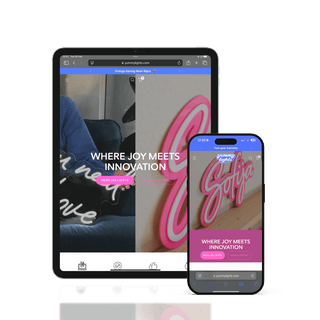
Whether you're launching your first online store or rebuilding an existing one, the difference between a store that just exists and a store that actually sells comes down to how it's built, optimised, and maintained. This guide covers everything — from choosing the right e-commerce platform to designing for conversions, developing custom functionality, optimising for Google, setting up marketing, and growing your business long-term. It's the same playbook we use at Perfection Media for brands like Latvijas Pērles, RITO, AnotherKind, Hereford, Greenwalk, and dozens of others. We also host a free masterclass on how to profit with Shopify — if you prefer learning before committing, it's a great place to start.
Why E-Commerce Matters More Than Ever
Online shopping isn't a trend — it's the standard. Consumers expect to find, compare, and purchase products from their phone in under a minute. If your business doesn't have a fast, trustworthy, and well-designed online store, you're losing customers to competitors who do. The Latvian e-commerce market alone continues to grow year over year, and the businesses winning aren't necessarily the biggest — they're the ones with the best digital experience.
E-commerce is no longer just about having a website with a shopping cart. It's about creating a complete digital sales system that works 24/7 — attracting visitors through search engines, converting them with smart design and persuasive copy, processing orders smoothly, and bringing customers back with automated email marketing and retargeting campaigns.
Choosing the Right Platform: Shopify vs. WooCommerce vs. Wix vs. Custom
Shopify — The Industry Standard for Serious E-Commerce
Shopify powers over 5.8 million online stores worldwide and is trusted by brands of every size — from solo entrepreneurs to publicly traded companies. What makes Shopify stand out is its all-in-one approach: hosting, security, SSL certificates, PCI compliance, server maintenance, and automatic updates are all included. You don't need to worry about server crashes, security patches, or plugin conflicts. Your job is to sell — Shopify's job is to keep everything running.
The Shopify admin panel is intuitive enough for anyone to manage products, process orders, and update content, yet powerful enough for developers to build highly custom experiences using Liquid templating, custom JavaScript, and the Shopify API. It supports multi-language, multi-currency, and multi-market configurations out of the box through Shopify Markets.
WooCommerce — Flexible, But High-Maintenance
WooCommerce is a WordPress plugin that turns any WordPress site into an online store. It's open-source and highly customisable, but with that flexibility comes responsibility: you need separate hosting, constant plugin updates, regular security monitoring, and a developer on standby for when things break. For businesses with complex content needs alongside e-commerce (like a large blog or membership site), WooCommerce can work — but for pure e-commerce, Shopify is more efficient and reliable.
Wix — Easy Start, Limited Ceiling
Wix is a drag-and-drop website builder that also offers e-commerce functionality. It's great for very small businesses or solo projects with a limited product range, but it hits a ceiling quickly. Advanced customisation, complex product logic, third-party integrations, and multi-language setups are either limited or unavailable. If you're serious about growing your online sales, you'll likely outgrow Wix within a year.
Custom-Built Platforms (Laravel, React, etc.)
A fully custom e-commerce platform built on frameworks like Laravel, React, or Next.js gives you maximum control — but at a massive cost in both development time and ongoing maintenance. This makes sense for very large enterprises with unique business logic that no existing platform can handle. For 99% of businesses, Shopify offers everything you need at a fraction of the cost and time.
The Foundation: Strategy Before Design
The most common mistake businesses make is jumping straight into design or development without a clear strategy. Before a single wireframe is drawn, you need to answer these questions:
Who is your ideal customer? What problem does your product solve for them? How do they search for solutions online — what keywords do they use? Who are your main competitors, and what are they doing well (or poorly)? What's your average order value, and what conversion rate do you need to hit your revenue goals? What integrations do you need — payment gateways, shipping calculators, inventory management, accounting software, CRM?
At Perfection Media, we start every project with a discovery phase that covers all of this. We conduct competitor analysis, keyword research, customer journey mapping, and feature scoping. This is the foundation that everything else is built on — and it's what separates a store that generates revenue from one that just looks nice. You can learn more about our full-service approach here.
Design That Converts — Not Just Looks Pretty
A beautiful store that doesn't sell is a failed project. Design in e-commerce isn't about aesthetics alone — it's about guiding the visitor through a journey from curiosity to purchase. This is where buyer psychology meets UX design.
Every design decision we make is intentional: the hierarchy of information on a product page, the placement and colour of call-to-action buttons, the use of social proof (reviews, trust badges, client logos), the speed of the mobile experience, the simplicity of the checkout flow. We design mobile-first, because that's where most of your customers are. We prototype in Figma before writing any code, so you see and approve the full experience before development begins.
Our design approach for clients like AnotherKind and Rónna Cosmetics starts with understanding the brand's visual identity — colour palette, typography, photography style, tone of voice — and translating that into a digital experience that feels premium, trustworthy, and effortless to navigate. See more examples in our client portfolio.
Shopify Development: Custom Code, Not Cookie-Cutter Templates
While Shopify's theme store offers solid starting points, most serious e-commerce stores need custom development work to truly perform. This is what we specialise in at Perfection Media — building custom Shopify solutions using Liquid, CSS, JavaScript, and the Shopify API.
What does custom Shopify development include? Custom sections and blocks that the store owner can easily manage through the theme editor. Advanced product variant logic — think colour swatches, size selectors, bundled products, and dynamic pricing. Collection page filtering with custom sorting logic. Cart behaviour customisation — upsells, progress bars, free shipping thresholds. Checkout modifications and post-purchase flows. Multi-language support with market-specific pricing and content. Third-party integrations — from accounting software and warehouse management to loyalty programmes and review systems.
We write clean, maintainable code that follows Shopify's best practices. Every section is scoped properly, every image is optimised, and every custom element is tested across devices and browsers. This isn't about adding flashy features — it's about building a store that runs fast, converts well, and is easy to maintain. We also share the tools and resources we use with our clients.
SEO: Making Google Your Best Salesperson
Search engine optimisation isn't optional for e-commerce — it's essential. If your store doesn't appear when people search for your products, you're paying for every single visitor through ads. A well-optimised store generates free, high-intent traffic from Google every day.
We build SEO into every project from the ground up. Technical SEO covers the foundation: proper URL structure, canonical tags, structured data markup (JSON-LD for products, breadcrumbs, FAQ, and organisation), sitemap generation, robots.txt configuration, Core Web Vitals optimisation, and fast page load times. On-page SEO covers the content: keyword-optimised meta titles and descriptions for every page, proper heading hierarchy (H1, H2, H3), descriptive image alt text, internal linking strategy, and well-structured product and collection page content.
We also set up Google Search Console and Google Analytics 4 (GA4) with e-commerce tracking, so you can see exactly where your traffic comes from, how visitors behave on your site, and which products generate the most revenue. This data is the foundation for every optimisation decision going forward.
Content That Sells: Product Pages, Collection Pages, and Beyond
The content on your store isn't just filler — it's your salesperson. Every product description, collection page intro, and FAQ answer is an opportunity to convince a visitor to buy. We write SEO-optimised content that speaks directly to your target customer while naturally incorporating the search terms they use to find products like yours.
Product pages need more than a photo and a price. They need a clear value proposition, detailed specifications, lifestyle imagery, social proof (reviews, ratings), trust signals (returns policy, secure payment icons), and a frictionless add-to-cart experience. Collection pages need logical organisation, filter options that actually help shoppers narrow down their choices, and enough context to satisfy both the customer and Google's ranking algorithm.
Payment, Shipping, and Tax Configuration
A store that works flawlessly technically but has confusing checkout, limited payment options, or unclear shipping information will lose sales at the last step. We configure Shopify Payments (or alternative gateways where needed), integrate with local and international shipping providers, set up real-time shipping rate calculators, and configure VAT/tax rules correctly for the Latvian market and for cross-border EU sales.
For businesses selling across the EU, we help configure the OSS (One Stop Shop) VAT framework and ensure GDPR compliance with proper cookie consent, privacy policy, and data handling procedures. The technical setup is handled by our team — for specific tax obligations, we recommend consulting a licensed tax advisor or reviewing the VID e-commerce guidelines. Latvian businesses may also be eligible for LIAA digitalisation grants to co-finance their e-commerce development projects.
Post-Launch: The Work That Actually Drives Growth
Launching a store is the beginning, not the finish line. The real growth happens in the weeks and months after launch, when you start collecting data and optimising based on real customer behaviour.
We offer ongoing support that includes conversion rate optimisation (CRO) based on analytics data, A/B testing of key pages and elements, Meta Ads and Google Shopping campaign setup and management, Klaviyo email marketing automation (welcome flows, abandoned cart recovery, post-purchase sequences), content updates and seasonal promotions, technical maintenance and feature development, and monthly performance reporting with actionable insights.
Our goal isn't just to deliver a store — it's to build a revenue engine that grows with your business.
Why Latvian Brands Choose Perfection Media
We're not a generic web development agency. We are a specialised e-commerce team that lives and breathes Shopify. Our client list includes some of Latvia's most recognised brands — Latvijas Pērles, RITO, AnotherKind, Hereford, Greenwalk, Rónna Cosmetics, Elu Luma, Findys, GEKA, Montfay, and Kokvilnas Audumi — as well as international clients in Denmark, the UK, and beyond.
What sets us apart is that we don't outsource. Every project is handled by our in-house team: a dedicated project manager, Shopify developer, designer, and SEO/marketing specialist. You get a single point of contact, clear timelines, transparent pricing, and a team that genuinely cares about your results — not just delivering a project and moving on.
We cover everything from A to Z: strategy, design, development, SEO, content, ads, email marketing, and ongoing support. One team, one vision, one goal — making your online store the best salesperson your business has ever had. Ready to start? Get in touch or explore our service packages.