You've spent months building your store, carefully selecting products, setting up shipping, and serving customers with genuine dedication. And then — a one-star Google review, a complaint on social media, or an angry email. We have great clients, but misunderstandings happen — and what matters most isn't that a complaint appeared, but how your business responds to it. This article is about how, as an online store owner, you can calmly, wisely, and professionally handle negative reviews, complaints, and reputation challenges.
Why Negative Reviews Happen to Online Stores
A negative review doesn't always mean you did something wrong. Of course, sometimes mistakes happen — a product arrives damaged, delivery is delayed, or a description was inaccurate. But just as often, complaints arise from situations entirely outside your control: the customer didn't read the product specifications, expected a different colour tone on screen compared to reality, or was simply having a bad day.
In e-commerce, the risk is higher than in a physical shop because customers can't touch the product before buying. That means even with perfect service, dissatisfaction is sometimes unavoidable. The important thing to understand is that one negative review is not a catastrophe — it's an opportunity to show how your business handles problems.
How to Tell a Legitimate Complaint from a False Review
Not all negative reviews are created equal. Before you react, it's important to assess what you're dealing with:
A legitimate complaint — the customer describes a specific situation that actually happened. For example, a product was delivered with a defect or the order was delayed. In these cases, the best response is to acknowledge the problem, apologise, and offer a solution.
An emotional reaction — the customer is unhappy, but the complaint is based on a misunderstanding or unrealistic expectations. For example, they expected free shipping even though the terms were clearly stated. Here, a calm, fact-based response with an offer to resolve the situation helps.
A false or misleading review — the review contains claims that don't match the facts, or was left about an order that never happened. This can also occur due to competitors or disgruntled former employees. In these cases, it's essential to stay calm, document the facts, and use the platform's reporting tools.
How to Publicly Respond to a Bad Review — 7 Steps
A public response to a negative review is just as important as resolving the complaint itself — it's read not only by the person who complained, but by hundreds of potential customers. Here's how to do it right:
- Stop and don't react emotionally. Read the review, give yourself an hour or two before responding. An emotional reply almost always makes things worse.
- Thank them for the review. Even if it feels unfair, showing gratitude for the time taken demonstrates professionalism. "Thank you for sharing your experience."
- Acknowledge the customer's feelings. "We understand this situation was unpleasant" — this isn't admitting fault, it's showing human empathy.
- Present the facts without accusations. If the review contains inaccuracies, calmly explain your side: "According to our records, the order was shipped within 24 hours."
- Offer a solution. An exchange, refund, or discount on the next purchase — a concrete offer shows you care about the outcome, not just winning an argument.
- Move the conversation to a private channel. "Please contact us by email so we can resolve this" — this lets you handle details without public tension.
- Follow up and close. After resolving the issue, ask if the customer is satisfied. Sometimes a resolved complaint turns into a positive review.
What to Do If a Review Isn't True
False reviews online are a real problem, and e-commerce store owners have both the rights and the tools to deal with them. The most important thing — never respond aggressively or with threats, even if you're completely certain you're in the right.
If the review is on Google, you can report an inappropriate review to Google — indicating that it's fake, contains abuse, or doesn't relate to your business. Platforms like Trustpilot offer similar reporting mechanisms.
At the same time, respond publicly with facts: "Our system shows no order matching these details. If you are our customer, please contact us so we can help." This kind of response shows potential customers that you're transparent and professional, while indirectly highlighting the review's questionable nature.
If the situation is serious and false claims are causing real damage to your business, consult a lawyer. You can also explore dispute resolution platforms relevant to your market — in Latvia, for example, options include the Complaints Platform or the Procurement Monitoring Bureau for commercial disputes.
How to Build Long-Term Reputation and Customer Trust
The best defence against negative reviews is an overwhelming majority of positive ones. If you have 95 positive and 5 negative reviews, a potential customer sees the full picture and trusts you. But if you have 3 reviews total and one is negative — it dominates.
Actively encourage satisfied customers to leave reviews. This isn't manipulation — it's a fair reflection of your work. Shopify stores have excellent tools for this — for example, Judge.me or other Shopify review apps that automatically send a request after purchase. You can also use the Google Customer Reviews programme to build trust directly in search results.
Other long-term practices that strengthen reputation include fast and empathetic customer service, a clear returns and exchange policy, honest product descriptions and photography, regular communication with customers through email, and — of course — the quality of your product and service.
Perfection Media Reviews — How We Approach Reputation Ourselves
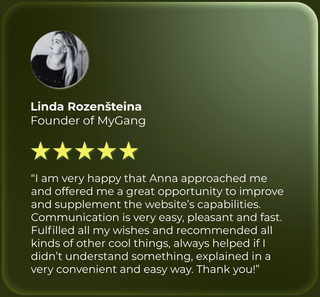
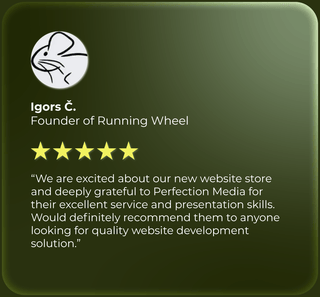
Speaking of Perfection Media reviews — we practice the same principles we describe in this article. Our clients are Latvian and international brands that we work with long-term, and we're proud that the majority of our new clients come through referrals.
That said, we also understand that misunderstandings can happen in any business. What matters isn't whether anyone has ever been unhappy — what matters is how a company responds. We always aim to reply quickly, resolve issues concretely, and learn from every situation.
If you're looking up Perfection Media reviews to decide whether we're a trustworthy partner — we'd recommend looking at our client work and asking directly those we've collaborated with. Reputation isn't just a number next to stars — it's long-term trust built through honest work.
Conclusion
Negative reviews and complaints aren't a signal that your business is bad. They're part of e-commerce reality — and the way you handle them tells potential customers more than any advertisement. Respond calmly, rely on facts, resolve problems, and build a reputation that stands the test of time. In the end, trust isn't built by a perfect rating — it's built by honest, human, and consistent behaviour.
Frequently Asked Questions
Can I ask Google to remove a false review?
Yes — Google allows you to report a review that is fake, contains hate speech, or doesn't relate to your business. Google reviews each report and can remove the review if it violates platform policies. However, the process can take time, and not all complaints are deemed non-compliant.
How quickly should I respond to a negative review?
Ideally — within 24–48 hours. A quick response shows you care about the customer experience. But it's better to respond thoughtfully after an hour than impulsively after five minutes. Never reply when you're angry.
Is it worth offering compensation for a bad experience?
If the complaint is legitimate — absolutely. A refund, free exchange, or discount on the next purchase is a small investment compared to the trust you gain. If the complaint is false, don't offer compensation — instead, provide a fact-based response.